
Airspace across the Middle East has never been busier, yet access is becoming increasingly restricted. With geopolitical tensions intensifying under the ongoing "Operation Epic Fury," the aviation networks that normally connect the Gulf Cooperation Council (GCC) to the wider world are under extraordinary strain. Key airports, including Dubai International (DXB), Abu Dhabi (AUH), and Hamad International in Doha, are facing temporary closures, rerouted flights, and widespread delays.
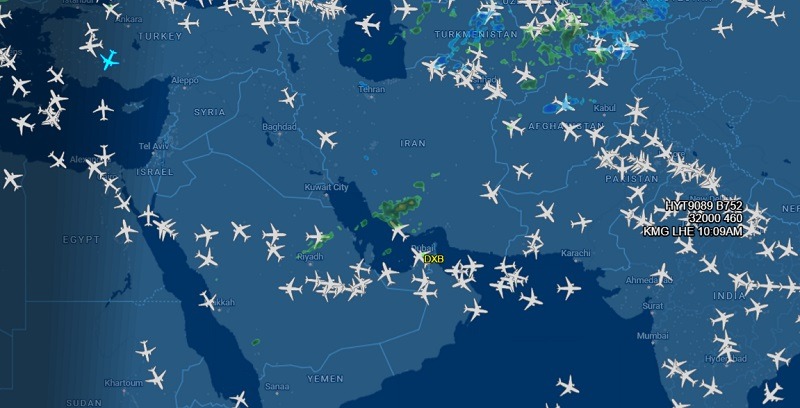
Image Courtesy: Flight Aware, 03 March 2026
More than one million travellers in the region are frequently told by airlines to simply wait. Being confined to airport terminals or hotel lobbies without options can be stressful, both mentally and logistically. At Final Rentals, we operate directly on the ground in Dubai and Qatar. Our perspective extends beyond flight schedules to real-time traffic on Sheikh Zayed Road and border crossings across the GCC.
When the skies are unpredictable, the road becomes a crucial alternative. This article outlines practical strategies for travellers focusing on mobility, safety, and operational flexibility. We cover five essential areas: cross-border ground travel, maintaining control while stranded, insurance clarity in conflict-affected regions, flexible booking policies, and evacuation planning for expatriates.
The most immediate consequence of current disruptions is the impact on air corridors. In the last 72 hours, nearly 40% of flights connecting the UAE, Saudi Arabia, and Oman have been delayed or cancelled due to airspace security alerts. Travellers trying to reach safe zones or operational airports cannot rely solely on flights.
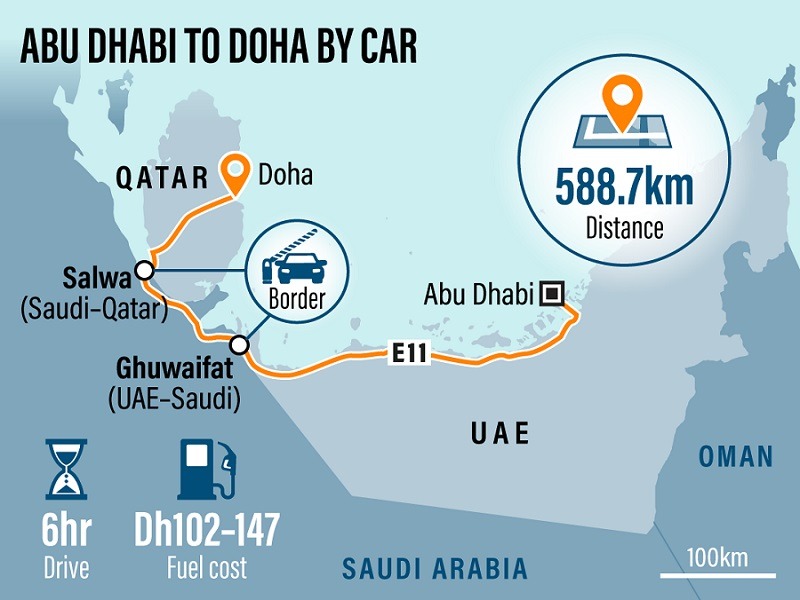
Here, long-term car rentals shift from convenience to necessity. The GCC road network is among the most advanced globally. Dubai to Muscat, Oman, takes roughly 4.5 hours via the Hili Border, while Dubai to Dammam, Saudi Arabia, is about 6 hours. Despite airspace closures, land borders in the GCC remain mostly open for civilian travel with proper visas and documentation.
For someone stuck in Dubai with a cancelled flight, a rental vehicle allows relocation to an airport that is still operating. If Doha faces restrictions, driving to a hub in Oman or southern Saudi Arabia may be the only route for onward travel to Europe or Asia.
Planning is essential. Final Rentals advises choosing long-term car rentals in the UAE (30 days or more) to ensure reliable planning for cross-border travel. Short-term daily rentals often impose mileage caps and insurance restrictions that do not cover international movement.
Our long-term fleet includes GPS tracking, emergency roadside assistance covering GCC borders, and all necessary registration documents (Mulkiya) for customs. We are not advising travel into conflict zones. Rather, we advocate using the GCC’s robust highway system to reach safer regions or operational airports.
The impact of these disruptions goes beyond missed flights. Over 30,000 German tourists and 58,000 Indonesian pilgrims are reportedly stranded across the region, stuck in hotels, cruise terminals, or airport lounges.
A major challenge is losing control over your travel. When flights are delayed or cancelled, travellers must rely entirely on the airline’s schedule. This lack of control can cause significant stress, especially for families with children, elderly pilgrims, or tourists unfamiliar with the region.
The "Safe Harbour" rental offers both mental and practical relief. With a private vehicle, travellers are no longer confined to their hotels and can move freely. They can shop for supplies, relocate to quieter areas, or avoid crowded districts without relying on public transport.
For large groups, such as Indonesian pilgrims, rental vehicles enable decentralised movement to consulates or safe assembly points. German tourists accustomed to independent travel regain control, transforming a passive waiting situation into active mobility.
Final Rentals prioritises SUVs and larger vans for families and groups needing to stay together, ensuring adequate space and flexibility.
Many of our customers in Dubai and Doha are worried about who is responsible for potential damage. Many standard rental agreements and travel insurance policies exclude "Acts of War," "Civil Commotion," or "Force Majeure." While this is usually fine print, in the context of "Operation Epic Fury," it becomes central.
Transparency is critical. Most policies exclude direct military damage, terrorism, or nuclear hazards. Yet the UAE and Qatar remain secure for everyday vehicle use. Risks to rental cars are more likely from traffic disruptions, panic driving, or abandoned vehicles. Final Rentals has implemented a Crisis Coverage Protocol during the current alert period:
We encourage customers to consider our Premium Protection Package, which reduces the deductible to zero for non-war-related incidents and provides 24/7 support. Claims are assessed on a case-by-case basis with a focus on supporting the traveller.
Government advisories, including those from the UK Foreign Office and US State Department, recommend avoiding airports unless flights are confirmed. This creates a dilemma: a car is needed for the airport, but travellers hesitate to book without certainty.
Final Rentals has introduced a Zero-Penalty Crisis Policy for all bookings in the Middle East:
This policy allows travellers to stay mobile without worrying about losing money during unpredictable travel conditions.
The Gulf hosts a large expatriate population, including hundreds of thousands of Western and Asian residents. Governments are preparing contingency plans that may involve ports, military zones, or specific airports.
Public transport may be unreliable during evacuations, making private vehicles essential. Final Rentals has created an evacuation support system:
For British citizens or others without cars, rentals provide a crucial link between home and evacuation points. Reservations are prioritised for verified evacuees.
Air travel is centralised and vulnerable to airspace restrictions. Road mobility is decentralised and adaptable. As a global car rental provider operating across Dubai and Qatar, Final Rentals focuses on three pillars:
Geopolitics cannot be controlled, but operational responses can. In uncertain times, flexibility, not speed, is the greatest asset. And flexibility starts with the ability to move on your terms.
Stay safe. Stay mobile.